


I was having this idea for this thread for quite some time. I wanted to create this since LTL is quite a bit different than OTR. I see a lot of different questions like “so what is this? and what is that? what does this mean? and what is there difference between this and that???” .
If you are not familiar with LTL, this may help with our terminology. Some of my LTL comrades are prolly going “Duh.. no crap” which is fine since this thread is not meant for you guys. But nonetheless, I decided to put it in pictures for everyone else.
NOTE 1. Yes, I took much of it from Google, IF anything posted here holds a copyright, I apologize to TTR for any infringement.
NOTE 2. If anyone has more to add, please do so! Let’s keep this interactive! I will get to go first since it was my idea.

Twin-screw tractor – A tractor with two axles (in the back). Usually used for line drivers that cover 300-600+ miles per trip.
Advantage: Good traction in the snow. You are allowed 34,000 lbs vs the 20,000 lbs for a single axle.

Single-axle tractor – Aka city truck. Title implies that this truck only has one axle in the back. Favourite for pick-up and delivery drivers! Advantages: Much better turning radius which allows easier maneuverability in tight city traffic patterns. One less axle (and also four less tyres) you have to pretrip.
Downsides: Less allowable weight 20,000 lbs vs the 34,000 lbs for a twin screw. DOT magnet… Yup! If you happen to pass a scale on your route, you may end up having to undergo a DOT inspection for the same reasons you enjoy the advantages

Liftgate trailer – Has a lift at the end that goes up and down. Works awesome for moving heavy items up and down for customers that don’t have a dock. Be sure to bring an electrical cord to plug into your truck to ensure your liftgate is properly charged… otherwise you will find yourself having the lift being stuck in the “down” position.

Pallet Jack – device that uses the hydraulic mechanical advantage to move heavy pallets. If you never seen one you probably live under a rock… Go check out Walmart at night when they shuttle their pallets around their store to restock all your favourite fatty goodness snacks. You will see ’em.
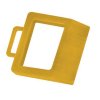
Pallet Jack chock – Secures the pallet jack from sliding around your trailer and causing a lot of damage. What more can I say…
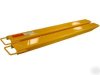
Forklift tine extension – Used to move the more awkward pieces of freight.

Stinger (carpet roll attachment)- Used to move large rolls of carpet. I also got really good at taking out freight with it inside the terminal while trying to make turns with it.

Hand truck – Not gonna get into the explanation for this one. If you never seen one, you ARE in the wrong career field.

Converter Dolly – Hooks to the back of a trailer and connects another trailer to the back. AKA… a fifth wheel mounted to an axle that has a relay for your air supply (air lines to go to the second or third trailer). There are models that have tandems.. but this is the only one I found.

Rocky Mountain Doubles – 48 foot trailer in the front, 28 foot trailer in the back. Legal in some states (but not most). And YES, they do come in a reverse order!!!! You CAN put the 28 footer in the FRONT if it is heavier. I call it a “Reverse Rocky Mountain Set. Please do not argue this!!!
Leave a Reply